

By using our website, you agree to the use of cookies as described in our Cookie Policy
The Differences in Court Filing Between Dallas and Fort Worth
Filing court documents in Dallas versus Fort Worth isn't the same process. Different counties, different clerks, different rules. Most people assume it's all one system because they're both in North Texas, but that's not how it works. Tarrant County runs Fort Worth. Dallas County runs Dallas. And each one has its own way of handling filings, fees, and deadlines. If you're working with an attorney or handling your own case, knowing these differences can save you time and keep your paperwork from getting kicked back.
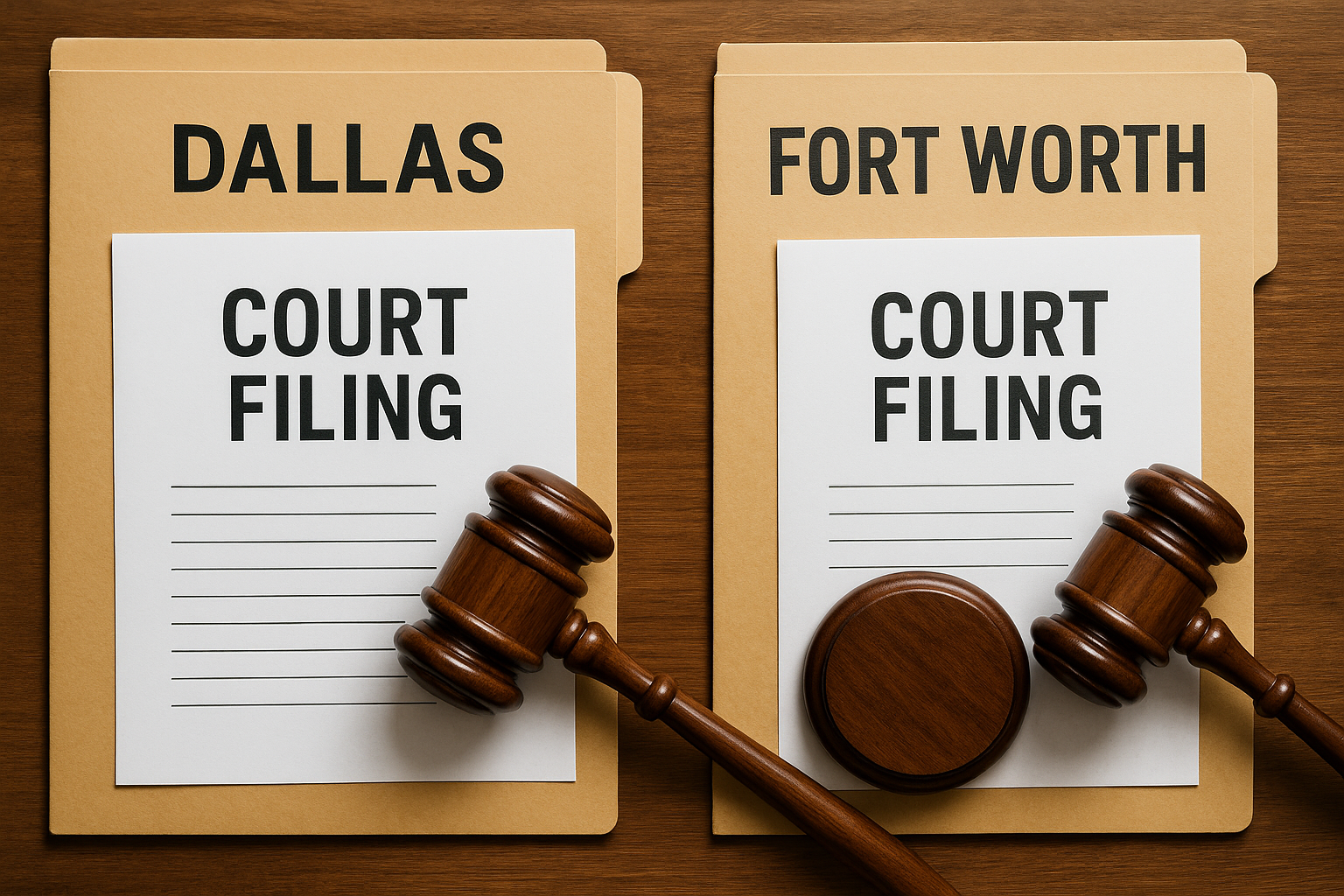
We've worked with both systems long enough to know where the gaps are. Some things are universal across Texas courts, but plenty of details shift depending on which clerk's office you're dealing with. Whether you're filing a civil suit, submitting a motion, or just trying to get something stamped and recorded, the county you're in matters more than you think. Here's what changes when you cross county lines.
Court Jurisdictions
Dallas and Fort Worth operate under separate county court systems, and that means different judges, different dockets, and different administrative procedures. Dallas County courts handle cases filed within their jurisdiction, and Tarrant County does the same for Fort Worth. You can't file a case in Dallas if the defendant lives in Fort Worth and expect it to stick. Jurisdiction matters, and filing in the wrong county can get your case dismissed before it even starts.
Each county also has its own district courts, county courts at law, and justice of the peace courts. The structure is similar, but the volume and speed of processing can vary. Dallas tends to handle a higher caseload, which can affect how quickly things move through the system. Fort Worth's courts are busy too, but the rhythm is different. If you're not sure where to file, it's worth checking with a professional service provider who knows both systems inside and out.
- Dallas County courts are located downtown and handle cases filed within Dallas city limits and surrounding areas
- Tarrant County courts are based in Fort Worth and cover a wider geographic area with multiple courthouse locations
- Filing in the wrong jurisdiction can delay your case or result in dismissal
- Each county has its own local rules that supplement the Texas Rules of Civil Procedure
Understanding jurisdiction isn't just about geography. It's about making sure your case lands in front of the right judge, in the right building, with the right paperwork. If you're working with a process server or legal team, they'll help you navigate which county court applies to your situation.
Filing Fees
Filing fees aren't identical across Dallas and Fort Worth. Both counties charge based on the type of case and the court level, but the amounts can differ slightly depending on local fee schedules. Civil suits, family law cases, and probate filings all come with their own price tags. Dallas County publishes its fee schedule online, and so does Tarrant County, but you'll need to check both if you're comparing costs. Some filings run a few hundred dollars, others can hit over a thousand depending on what you're asking the court to do.
Fee waivers are available in both counties if you qualify based on income, but the process for applying isn't always the same. Dallas has its own forms and procedures, and Fort Worth follows Tarrant County's guidelines. If you're filing without an attorney, make sure you're using the right forms for the right county. Missing a fee or submitting the wrong payment can stall your case before it even gets assigned a number.
Electronic vs Paper Filing
Both Dallas and Fort Worth have moved toward electronic filing, but the systems they use and the rules around them aren't identical. Dallas County uses the statewide eFiling system through the Texas Judicial Branch, and so does Tarrant County. But each clerk's office has its own preferences for how documents should be formatted, labeled, and submitted. Some courts require electronic filing for certain case types, while others still accept paper in specific situations.
If you're filing electronically, you'll need to register with an approved eFile service provider. The system generates a confirmation once your document is submitted, but that doesn't mean it's been accepted. The clerk still reviews it, and if something's wrong, you'll get a rejection notice. Paper filing is still an option in both counties for people who aren't required to use the electronic system, but it's slower and requires a trip to the courthouse. If you're not sure which method applies to your case, electronic filing is usually the safer bet for speed and tracking.
- Dallas County clerks prefer electronic submissions for most civil and family law cases
- Tarrant County also uses the statewide eFiling portal but has its own local formatting preferences
- Paper filings are still accepted in both counties but take longer to process
- Rejected eFilings must be corrected and resubmitted, which can delay your case
- Not all case types are eligible for electronic filing, so check with the clerk's office first
We've seen plenty of filings get bounced back because the formatting didn't match what the clerk expected. It's not always obvious what went wrong, and the rejection notice doesn't always spell it out. That's where working with someone who knows the system can make a difference. Whether you're handling court filing yourself or relying on a team, knowing the quirks of each county saves time.
Processing Time
How fast your filing gets processed depends on which county you're in and how busy the clerk's office is that week. Dallas County tends to have a higher volume of filings, which can slow things down during peak times. Tarrant County moves at its own pace, and while it's generally efficient, there are still delays depending on the type of case and the court it's assigned to. Electronic filings usually get reviewed faster than paper, but that's not a guarantee.
If you're filing something time-sensitive, don't assume it'll be stamped and entered the same day. Both counties aim for quick turnaround, but there's no universal standard. Some filings get processed within 24 hours, others take a few days. If you're working with deadlines, build in extra time and confirm receipt with the clerk's office. We've helped clients track down filings that got stuck in the system, and it's always easier to catch early than to scramble at the last minute.
Accepted Payment Methods
Dallas and Fort Worth both accept credit cards, checks, and money orders for filing fees, but the specifics vary by location. Dallas County allows online payment through the eFiling system, and you can also pay in person at the clerk's office. Tarrant County offers similar options, but some courts within the county have their own payment procedures. Cash is accepted at some clerk windows, but not all of them, so it's worth calling ahead if that's your only option.
- Credit and debit cards are accepted in both counties for most filings
- Checks and money orders must be made out to the correct county clerk
- Online payments are processed through the eFiling portal for electronic submissions
- Some courts charge a convenience fee for credit card payments
- Cash payments are accepted at certain clerk windows but not universally
If your payment gets rejected or doesn't go through, your filing won't be processed. That's true in both counties. Make sure your payment method is valid and that you're submitting the correct amount. If you're not sure what the fee is, check the county's website or ask the clerk's office before you submit. It's a small detail, but it can hold up your entire case if it's wrong.
Clerk Procedures
The way clerks handle filings in Dallas versus Fort Worth isn't night and day, but there are enough differences to trip people up. Dallas County clerks tend to be strict about formatting and labeling, especially for electronic filings. Tarrant County clerks have their own preferences, and what works in one county might not fly in the other. Both counties require a cover sheet for most filings, but the format and required information can vary.
If you're filing in person, expect to wait. Both clerk's offices get busy, and there's no fast pass. Bring your documents, your payment, and any supporting paperwork the court requires. If something's missing, you'll have to come back. We've worked with both clerk's offices enough to know that preparation matters. If you're not sure what's required, common questions about filing procedures can help you avoid mistakes before you show up.
Get Help with Court Filing in Fort Worth
Filing in Dallas or Fort Worth doesn't have to be a guessing game. We work with both county systems every day and know what each clerk's office expects. Whether you need help with electronic filing, document preparation, or just figuring out which county to file in, North TX Civil Process has you covered. Call 682-409-4415 or request service online to get started.
‹ Back
Recent Posts
-
-

When Should You Request Rush Court Filing in Fort Worth?
September 23, 2026
-

Can You Email Legal Documents to a Process Server in Dallas?
September 9, 2026
-
-