



By using our website, you agree to the use of cookies as described in our Cookie Policy
Can a Process Server in Dallas Serve Someone at a P.O. Box?
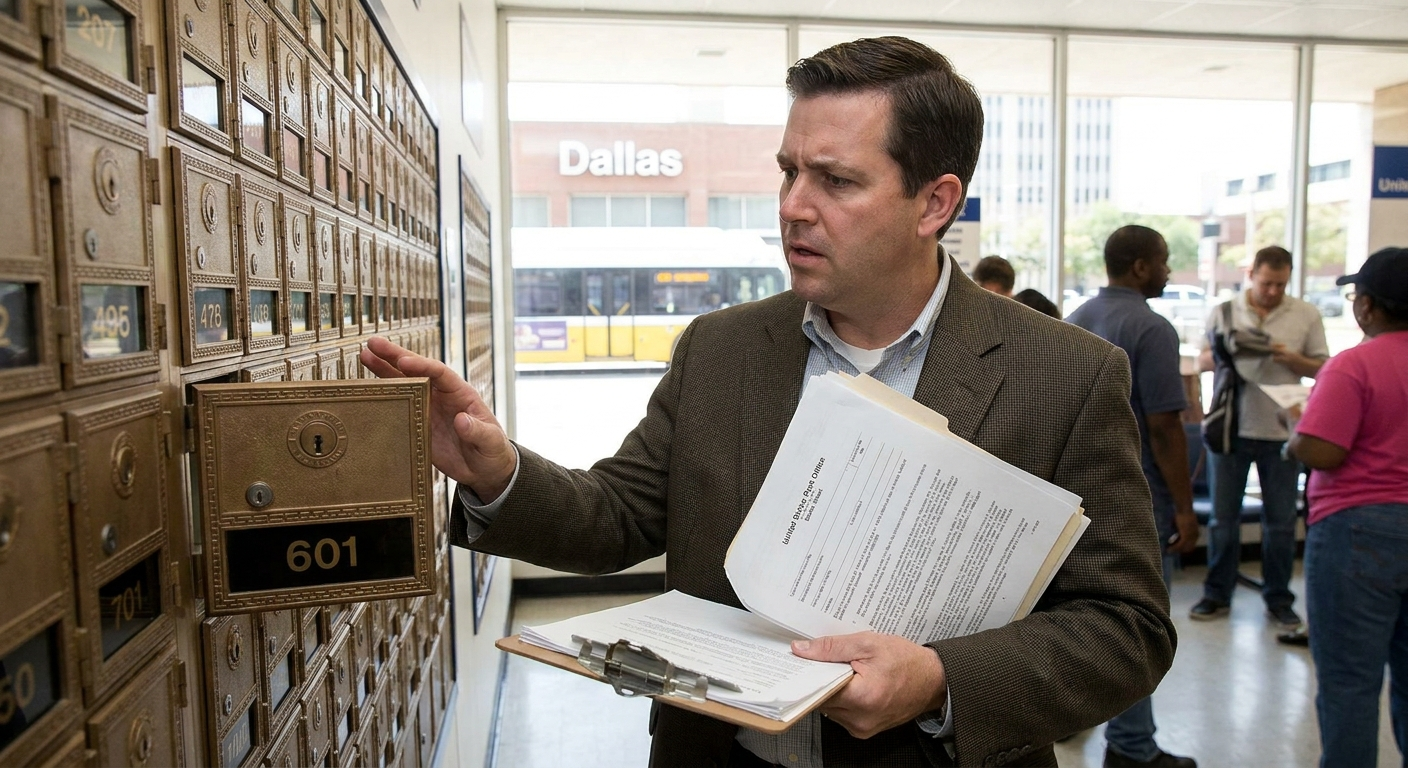
Most people think a mailing address is good enough for anything. Bills, notices, maybe even court papers. But the law sees a P.O. Box differently — and if you're trying to serve someone there, you're headed for rejection. Process service isn't about convenience. It's about certainty. And a locked metal box at the post office doesn't meet the threshold.
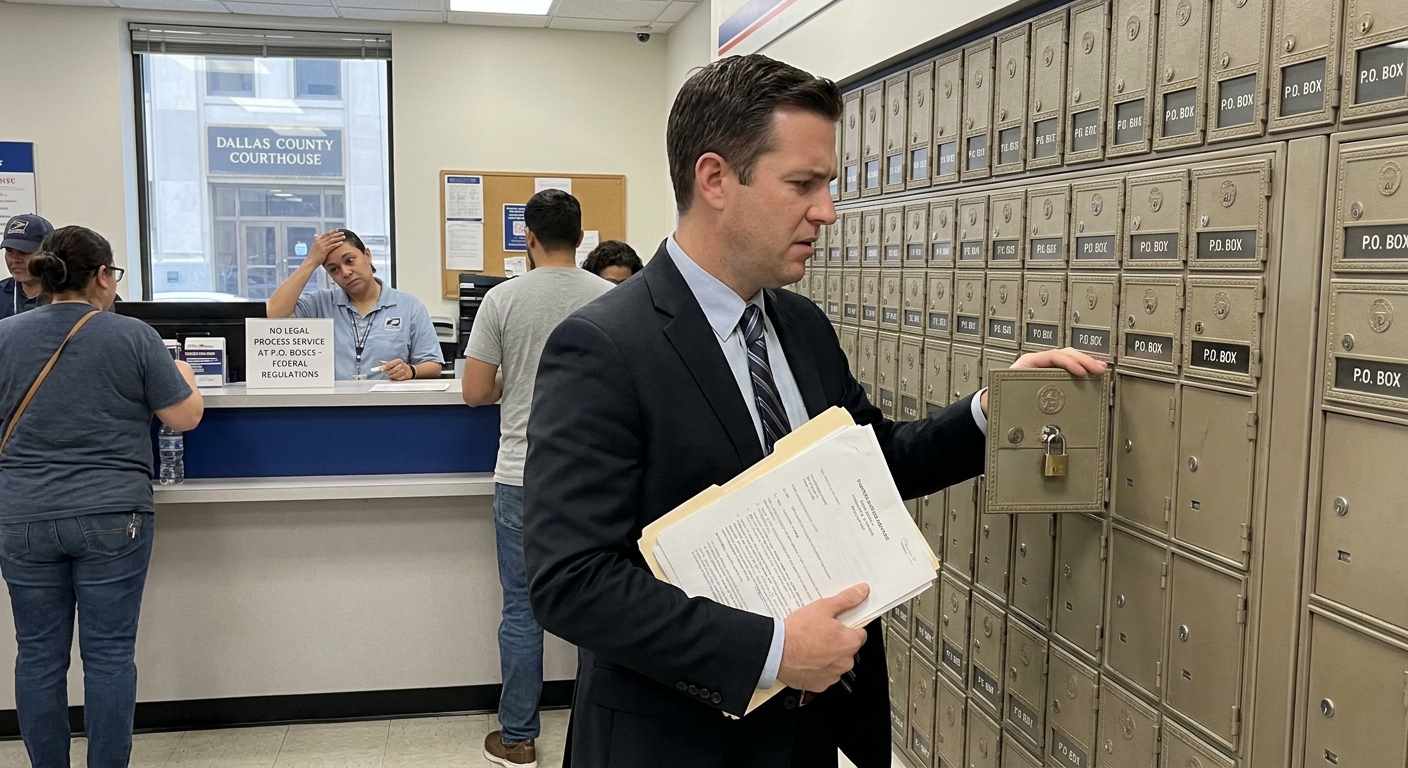
So here's what matters. If you're trying to notify someone of a lawsuit, the courts want proof they actually received it. That means handing documents to a real person at a real location — not dropping them in a slot and hoping for the best. Every attempt should be traceable. Every method needs to follow the rules. And every service decision should be grounded in where the person actually is — not just where they pick up their mail.
The Law Demands More Than a Mailbox
Nine times out of ten, a P.O. Box won't cut it. You need someone's physical presence, not just their forwarding address. The Texas Rules of Civil Procedure are clear on this — service means personal delivery. That's handing the papers to the defendant, or in limited cases, someone authorized to accept them.
But what if that's the only address you've got? Different problem. The court doesn't care what's convenient for you — only that the recipient had a fair shot at knowing they've been sued. We've seen this play out in real time with cases dismissed over faulty service. Plenty of plaintiffs thought mailing it was enough — it wasn't. And when service gets challenged, the burden falls on you to prove it was done right.
Why Post Office Boxes Don't Qualify
You can't serve papers at a P.O. Box because there's no guarantee the person will receive them in hand. The USPS doesn't let process servers walk into the back room and wait by the boxes. They don't allow documents to be stuffed inside. And even if they did, there's no way to confirm who opened it or when.
Service requires accountability. A signature. A witness. Something that proves the defendant wasn't left in the dark. A P.O. Box offers none of that. It's a drop point, not a residence. And the courts won't accept it as valid delivery under any standard service method.
What You Can Do Instead
Want to move forward with service? You'll need to track down a physical address — and that takes legwork.
Here's where most process servers start:
- Skip tracing tools that pull property records, voter registration, and utility connections
- Public databases showing recent addresses tied to the defendant's name
- Employment records if the person works for a registered business
- Social media profiles that hint at current location or workplace
- Known associates who might confirm where the person lives or operates
If all else fails, you can petition the court for substituted service. That might mean leaving papers with a household member, posting them at the last known residence, or — in rare cases — publishing notice in a local newspaper. But none of that happens without court approval. And none of it starts until you've exhausted every reasonable effort to find the person.
When Alternative Methods Apply
Texas does allow substituted service under specific conditions. You'll need to prove the defendant is evading service or that personal delivery isn't possible despite diligent attempts. The court will want documentation — dates, times, addresses visited, people contacted.
Here's what strengthens your case for alternative service:
- Multiple attempts at different times of day
- Affidavits from neighbors or employers confirming the person's evasion
- Records showing the address is current but the defendant won't answer
- Evidence that the person is aware of the lawsuit but avoiding contact
Even then, substituted service has limits. You can't just mail it and call it done. You still need to follow up with certified mail or posting. And the court will scrutinize whether you truly exhausted every option before asking for a workaround.
Where Service Attempts Fall Apart
Most service issues stem from cutting corners. Trying to serve at a P.O. Box because it's easier? The judge won't find that acceptable. Failing to follow up after a no-answer? That's not due diligence. And relying on outdated addresses without verifying current residence? That's a waste of time and money.
Here's what trips people up most often:
- Assuming a mailing address is the same as a residential address
- Skipping the research phase and hoping one attempt will stick
- Not documenting every service attempt with dates, times, and results
- Waiting too long before seeking court approval for alternative methods
What Happens When Service Fails
Botch the service and the case stalls. Courts won't move forward without proof the defendant was properly notified. That means delays, additional costs, and in some cases, dismissal. If the defendant later argues they never received notice, improper service becomes your problem — not theirs.
The rules exist to protect due process. Everyone deserves fair warning before being hauled into court. And if you can't prove you gave them that warning, the system hits pause until you do it right.
Why Professional Servers Matter
DIY service is tempting, especially when budgets are tight. But professional process servers know the rules, the exceptions, and the documentation standards. They've tracked down elusive defendants before. They know when to push harder and when to pivot to substituted methods.
A professional server helps you:
- Locate current addresses through skip tracing and public records
- Attempt service at optimal times when defendants are likely present
- Document every attempt with affidavits that hold up in court
- Navigate substituted service requests with proper legal backing
- Avoid rejection and delays caused by improper technique
It's not just about handing someone a piece of paper. It's about making sure that delivery stands up under scrutiny. Because if the defendant challenges it, your proof needs to be airtight.
Service Done Right Moves Cases Forward
Tracking someone down isn't the hard part. Proving you did it correctly — and defending your methods if challenged — that's where weak service falls apart. There's no shortcut when the rules demand personal delivery. But there's also no reason to waste time on methods that won't hold up.
At the end of the day, a P.O. Box is just a locked drawer. It's not a person. It's not a residence. And it's not a valid place to serve legal papers. If you're serious about moving your case forward, you'll need to do the work to find where the defendant actually is — not just where they collect their junk mail.
Let’s Get Your Papers Served the Right Way
We know how frustrating it can be when process service hits a dead end at a P.O. Box. Let’s work together to make sure your documents are delivered properly and your case keeps moving. If you’re ready to get started, call us at 682-409-4415 or order process service now and let’s handle the details for you.
‹ Back
Recent Posts
-
Can a Process Server in Dallas Serve Someone at a P.O. Box?
November 18, 2026
-
Do You Need Records Retrieval Before Filing a Court Case in Dallas?
November 4, 2026
-
How Long Should You Keep Affidavits of Service in Texas?
October 21, 2026
-
-

When Should You Request Rush Court Filing in Fort Worth?
September 23, 2026