



By using our website, you agree to the use of cookies as described in our Cookie Policy
Can a Process Server in Fort Worth Serve Someone at an Apartment?
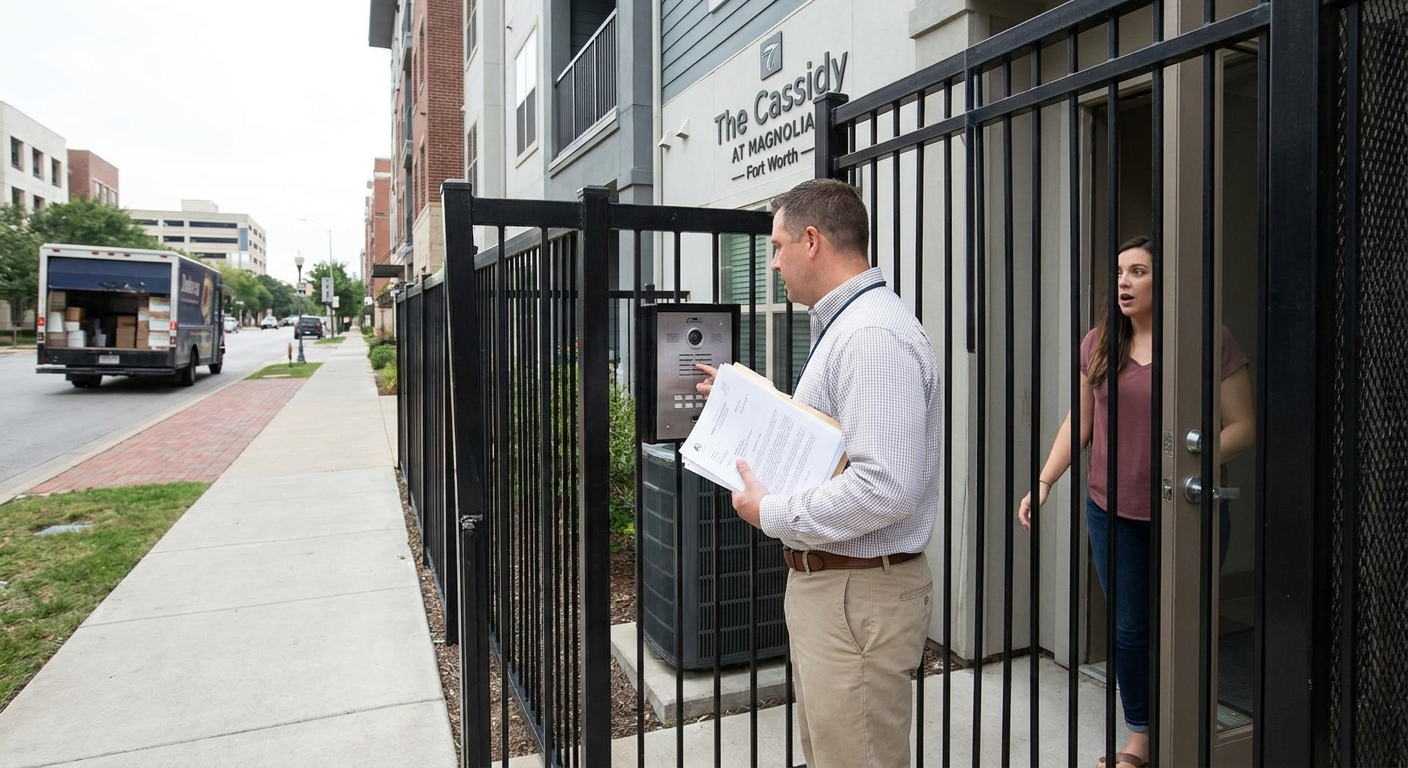
Most people think apartments are a shield. Four walls, a locked gate, maybe a security desk—suddenly you're untouchable. But the law doesn't see it that way. If you're named in a lawsuit, living in a high-rise won't save you from being served. Process servers in Fort Worth handle apartment deliveries all the time, and they've seen every trick in the book.

The real question isn't whether it can be done. It's how fast, how clean, and whether the person on the other end of those documents has any clue what's about to hit them. Because service at an apartment isn't impossible—it just requires someone who knows the terrain and won't quit after one locked door.
Apartments Don't Block Service
You can serve someone at an apartment just as easily as you'd serve them at a house or office. The law doesn't care where you live. It cares that you received notice. A process server's job is to find the person, hand them the papers, and document the delivery. Simple in theory. Trickier in practice when the building has three entry codes and no one's answering the buzzer.
But that's where experience comes in. A good process server doesn't give up after the first attempt. They come back at different hours. They talk to neighbors. They watch for patterns. And if personal service isn't possible after multiple tries, they've got legal workarounds that still hold up in court.
Access Is the First Hurdle
Gated complexes and secured buildings are common in Fort Worth, and they're designed to keep strangers out. That includes process servers—at least on paper. But in reality, most servers know how to navigate these barriers without breaking any rules.
Here's how they do it:
- Wait for a resident to open the gate and follow them in
- Contact property management to confirm the tenant's residence
- Arrive during high-traffic hours when doors are frequently opening
- Use information from neighbors or mail carriers to verify the person's presence
- Work with security staff when permitted by building policy
None of this is sneaky—it's standard operating procedure. The goal is to reach the person legally, not to intimidate or deceive. But it does require persistence, timing, and a willingness to show up more than once.
What Happens When No One Answers
Some people assume that ignoring the door means avoiding the papers. It doesn't. If a process server confirms that someone lives at the address and makes multiple attempts to serve them, Texas law allows for substituted service. That might mean leaving the documents with another adult at the residence. Or posting them on the door and mailing a copy. Either way, the person is considered served.
But substituted service isn't the first option. It's the backup plan. And it only happens after the server has documented every attempt—date, time, outcome, and method. If it goes to court, those records matter. The judge won't accept "I tried once" as diligent effort. But three attempts at different times of day? That's solid.
Texas Law Sets the Standard
Process servers in Texas operate under the Texas Rules of Civil Procedure, and those rules are clear. The server must be at least eighteen, can't be a party to the case, and must make genuine efforts to locate and serve the individual. If personal delivery isn't possible, substituted service requires court approval and proper documentation. Understanding legal requirements for process serving in Texas helps ensure proper service execution.
Here's what every valid service attempt includes:
- Proof that the server tried to deliver the documents in person
- Multiple attempts at different times or days
- Detailed notes on each visit
- Confirmation that the address matches the person being served
- Compliance with any special instructions from the court
Living in an apartment doesn't change these requirements. It just adds a layer of logistics. The law still expects the same level of diligence, and the server still has to prove they did everything right.
When Avoidance Backfires
We've seen people dodge process servers for weeks, thinking they're buying time. What they're really doing is making things worse. Courts don't look kindly on defendants who actively avoid service, and judges have the authority to approve alternative methods if someone's playing games.
That means your refusal to open the door can result in papers being taped to your apartment and a copy sent by certified mail. You don't get to choose whether you're served. You only get to choose how cooperative you are when it happens. When traditional methods fail, professionals often employ skip tracing to find people in DFW who are avoiding service.
Why Clean Service Protects Everyone
Proper service isn't just a formality—it's the foundation of due process. If someone isn't notified correctly, any judgment against them can be challenged or thrown out. That wastes time, money, and trust in the system. For plaintiffs, it means delays. For defendants, it means a valid defense. And for the court, it means a case that might have to start over. Understanding what makes a service attempt valid in Texas courts is crucial for proper legal procedure.
Here's what happens when service is done wrong:
- Defendants claim they never received notice
- Judgments get overturned on appeal
- Cases drag on for months longer than necessary
- Attorneys face sanctions for improper procedure
- Trust in the legal process erodes
That's why courts hold servers to a high standard. And why hiring a professional matters more than most people realize.
What Makes a Server Worth Hiring
Not all process servers are created equal. Some show up once and call it a day. Others understand that apartment service requires patience, timing, and a willingness to dig deeper. The best ones document everything, stay within the law, and don't stop until the job is done or a judge says otherwise. Professional servers understand how accurate affidavits matter in process serving and maintain detailed records of every attempt.
If you're filing a case in Fort Worth and need someone served at an apartment, you want a server who knows the local complexes, understands Texas rules, and won't leave you hanging. That's not something you find on a random website. It's something you vet with questions, references, and proof of past work.
Papers Get Delivered One Way or Another
Living in an apartment doesn't grant immunity from legal notice. It just changes the delivery method. Process servers in Fort Worth handle these situations daily, and they've built careers around solving the exact problems that most people think are unsolvable. Locked gates, avoided knocks, and tight schedules don't stop service—they just require a server who knows what they're doing.
If you're the one being served, expect persistence. If you're the one filing, expect results. Either way, the papers will land where they're supposed to. Because in Texas, the law doesn't wait for convenience. It waits for proof that someone tried hard enough to make contact. And at an apartment? That proof is easier to gather than most people think.
Let’s Make Service Simple
When it comes to serving legal documents at apartments in Fort Worth, experience and determination make all the difference. We know the ins and outs of every complex and understand exactly what it takes to get the job done right. If you need reliable process service that stands up in court, let’s talk. Call us at 682-409-4415 or order process service now and we’ll handle the details so you don’t have to worry.
‹ Back
Recent Posts
-
-

When Should You Request Rush Court Filing in Fort Worth?
September 23, 2026
-

Can You Email Legal Documents to a Process Server in Dallas?
September 9, 2026
-
-