


By using our website, you agree to the use of cookies as described in our Cookie Policy
Do You Need Records Retrieval Before Filing a Court Case in Dallas?
Most people filing a court case in Dallas think it's all about the complaint form and the filing fee. But that's just the first step. The real battle is fought with documentation — and if you show up without it, you're already behind. Records retrieval isn't optional prep work. It's the foundation of every claim, every defense, and every motion that follows. Without the right documents, your case is built on air.

So here's what matters. If you're planning to file in Dallas County, you need to know what records you'll need, how long it takes to get them, and what happens if you skip this step. Because timely court filing in Texas won't wait for you to catch up. And the other side won't give you credit for trying.
Why Documentation Comes First
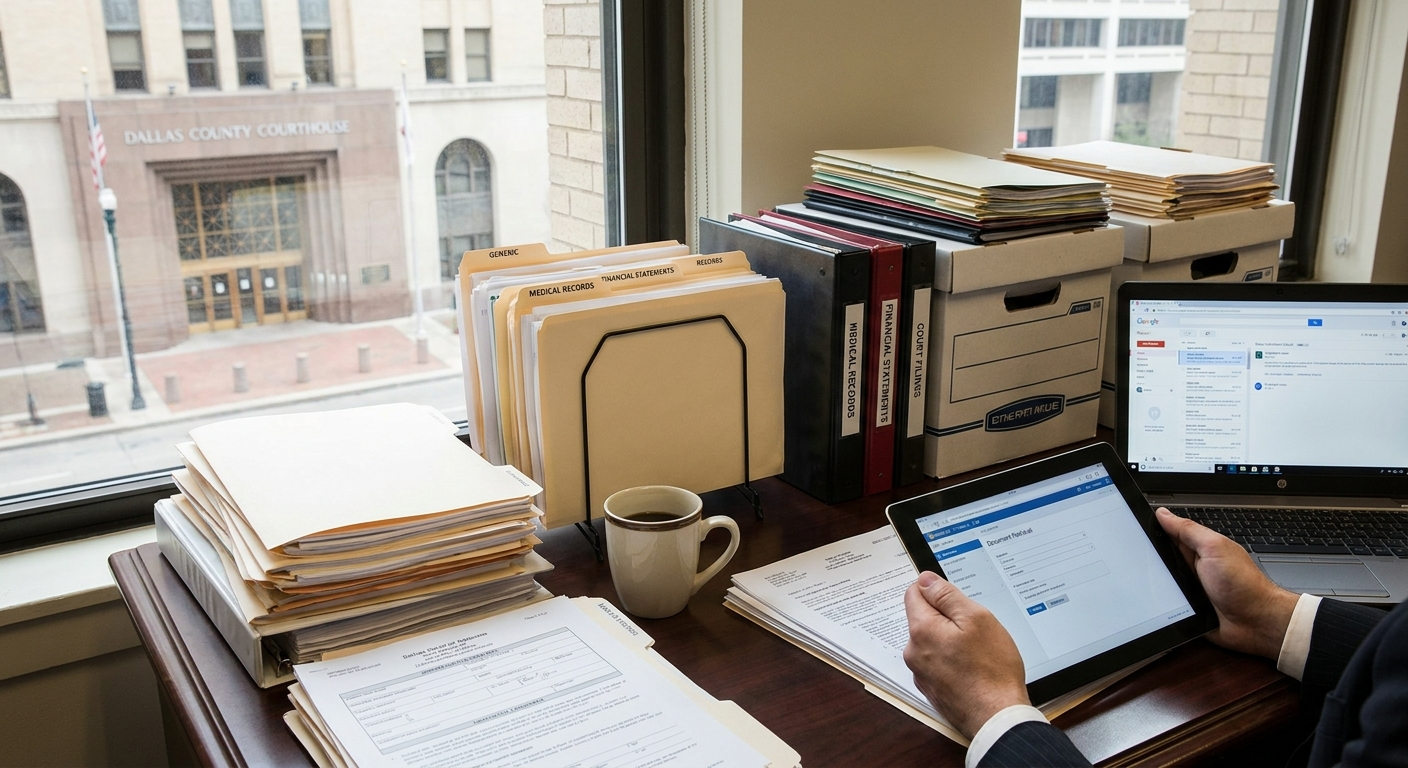
Records retrieval is the process of pulling together every piece of evidence that supports your position. Medical files, employment history, contracts, emails, financial statements — whatever proves your side of the story. In Dallas courts, judges expect you to back up every claim with something tangible. If you don't have it, they won't assume it exists.
Filing without records is like showing up to trial with half a script. You might know what you want to say, but you can't prove it. The opposing counsel will challenge everything. The judge will ask for documentation. And if you can't produce it, your case weakens fast. That's why we always tell clients to retrieve first, file second.
What Records You'll Actually Need
The documents required depend entirely on the type of case you're filing. Personal injury claims need medical records. Employment disputes need pay stubs and termination letters. Contract cases need signed agreements and correspondence. Every case has its own paper trail, and it's your job to map it out before you walk into court.
Here's a breakdown of the most common records pulled in Dallas cases:
- Medical records for injury, malpractice, or disability claims
- Financial statements for divorce, support disputes, or probate matters
- Employment files for wrongful termination or discrimination cases
- Contracts and agreements for business litigation or breach claims
- Communication logs including emails, texts, and letters
- Government filings such as police reports, court documents, or property records
Identifying which records matter takes experience. An attorney can help you avoid wasting time on irrelevant documents while making sure nothing critical gets overlooked.
How the Retrieval Process Works in Dallas
Some records are easy to get. Court document retrieval in Fort Worth and Dallas County can be accessed online through the Dallas County Clerk's portal. Others require formal requests, signed authorizations, and sometimes a subpoena. Medical providers, employers, and financial institutions all have their own procedures — and they don't always move fast.
For medical records, you'll submit a written request along with a signed HIPAA release. Employers typically require similar authorization before releasing personnel files. If a third party refuses to cooperate, you may need to issue a subpoena through the court. That adds time, and time is something most litigants don't have to spare.
Professional retrieval services exist to handle this legwork. They know the protocols, submit the right forms, and follow up until the records arrive. If you're juggling multiple providers or dealing with out-of-state entities, hiring a service can save weeks of frustration.
Common Mistakes That Cost You
We've seen plenty of cases get derailed because someone assumed records would be easy to get. They weren't. Or they thought they could file first and retrieve later. They couldn't. Here are the mistakes that show up most often in Dallas filings:
- Waiting until after filing to request records, then scrambling when deadlines hit
- Assuming verbal agreements or memory will suffice in place of written proof
- Requesting the wrong records or missing key documents that opposing counsel will exploit
- Failing to follow HIPAA or privacy protocols, which delays or blocks access entirely
- Ignoring out-of-state or third-party records that require subpoenas or additional steps
Each of these mistakes can be avoided with planning. Start early. Request everything. Don't assume anything will arrive on time.
When to Start Pulling Documents
The moment you know litigation is likely, start retrieving records. Some documents take days. Others take months. Large healthcare systems, government agencies, and financial institutions all have their own timelines — and none of them prioritize your case over their internal processes.
If you're up against a statute of limitations, you may need to file before every record is in hand. That's not ideal, but it's manageable if your attorney knows what's still pending and can update the court as documents arrive. Just don't file blind. Even incomplete records are better than none.
What Happens If You Skip This Step
Filing without records doesn't stop your case from moving forward — but it does weaken your position from day one. Opposing counsel will notice. They'll challenge your claims. And if you can't produce supporting documentation during discovery, you'll face motions to dismiss, sanctions, or worse.
Dallas judges expect preparation. If you're not ready, they'll call you on it. And once you lose credibility in court, it's hard to get it back. The time you save by filing fast gets eaten up tenfold when you're scrambling to fix gaps in your evidence.
Professional Help Makes the Difference
Records retrieval isn't glamorous, but it's where cases are won or lost. A good attorney knows which records matter, where to get them, and how to make sure they arrive before deadlines hit. Retrieving legal records in Dallas Fort Worth can handle the logistics while you focus on strategy.
Here's what working with a pro gets you:
- Accurate identification of which records are legally necessary
- Proper authorization and request forms submitted to every provider
- Follow-up with slow or unresponsive entities to keep things moving
- Subpoena preparation and filing when voluntary requests fail
- Organized documentation that's court-ready from the start
It's not just about getting the records. It's about getting them in a format that holds up under scrutiny and supports every argument you'll make.
Plan the Case Before You File It
You don't walk into a Dallas courtroom hoping things work out. You walk in prepared, with every document lined up and every claim backed by proof. Records retrieval from Dallas Fort Worth hospitals is the first real step in that process — and skipping it is a mistake we see too often.
If you're serious about your case, treat documentation like the weapon it is. Get it early. Organize it carefully. And make sure it's ready before you file. Because once that case is in motion, there's no rewind button. Only the records you brought with you — and the credibility they buy.
Let’s Get Your Case on Solid Ground
We know how overwhelming it can feel to gather every document you need before filing in Dallas. That’s why we’re here to help you get it right from the start, so you can walk into court with confidence and proof on your side. If you’re ready to move forward, give us a call at 682-409-4415 or order process service now and let’s make sure your records are ready when you need them most.
‹ Back
Recent Posts
-

Do You Need Records Retrieval Before Filing a Court Case in Dallas?
November 4, 2026
-
How Long Should You Keep Affidavits of Service in Texas?
October 21, 2026
-

-
When Should You Request Rush Court Filing in Fort Worth?
September 23, 2026
-

Can You Email Legal Documents to a Process Server in Dallas?
September 9, 2026